
Keeping Human Connections in Focus in our AI World
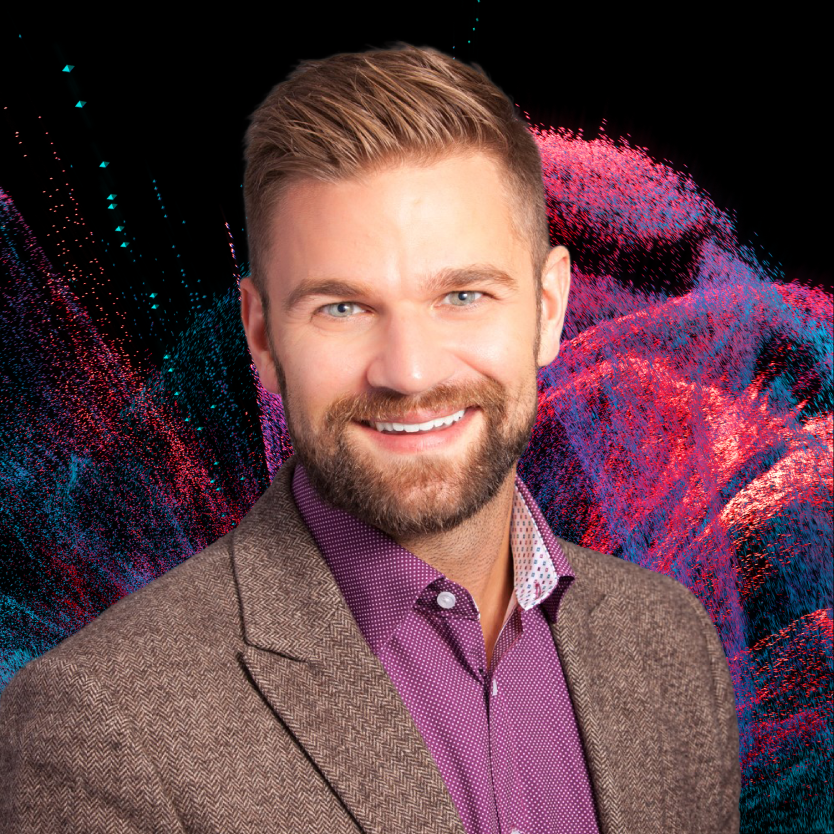
By: Nick Yoder, Ph.D., Associate Vice President, Harmony Academy
Can artificial intelligence demonstrate empathy?
This was a question someone asked me on the Summit Stage at this year’s ASU+GSV Summit. As a social scientist for over 20 years, I took a moment to reflect. Did we ever think we would consider artificial intelligence (AI) as an option to replace human empathy? Especially when navigating life’s stressors, personal mistakes, or even heartbreak?
At face value, one might say “yes.” When I type in a problem I’m having at work or with a partner, especially one that feels frustrating or emotional, the AI will respond with words that look and sound like empathy: “I am sorry you are going through that. That appears to be troubling. Let me see what we can do to support you.”

But what is empathy? It’s many things, such as:
- Being present with another person — emotionally and mentally. You show someone you are fully there to listen and support them as they share their thoughts or challenges.
- Understanding emotions. You seek to understand another person’s thoughts, emotions, and experiences without trying to solve their problems or emotions for them.
- Validating their emotions. You recognize where the emotion comes from. You aren’t necessarily agreeing with everything they say but acknowledging the emotion.
- Offering non-judgmental curiosity. You ask questions about their experiences and feelings.
While AI may be able to provide responses that showcase empathy, it cannot be fully present with a person because, at its core, it’s made up of 0s and 1s that do not feel or have human emotions. Further, AI is often trained to keep you coming back by telling you what you want to hear. So, I would argue that AI cannot truly validate nor offer non-judgmental curiosity because it is trained to please.
3 Key Takeaways from ASU+GSV 2026
While this was an important interaction I wanted to reflect more on, there were many other key takeaways from the ASU+GSV Summit this year, including:
- Human connections are more important than ever. As AI is now embedded in EdTech, we know that healthy relationships between teachers and students will be more important than ever.
- AI will be a valuable tool in the classroom. AI will remove the cognitive load for teachers related to lesson planning and assessments, providing opportunities for more authentic connections. Resources like Harmony can be used more widely without the same concerns about time constraints in the classroom and can facilitate stronger connections between teachers and students.
- AI will not replace the need for a compassionate educator. Our educators will need training to see how AI-supported learning tools can lead to more effective support for students. Only with trust, connection, and a strong sense of belonging built by teachers will student learning take place at the level needed for the jobs of the future. Our Belonging Together support is one way to ensure these important conversations continue in school communities with school leaders and their staff.
This year’s ASU+GSV Summit: The Power of Fusion, where we explored the future of AI-supported learning through a human-centered approach, will continue to be at the forefront of our work at Harmony.
Check out Dr. Yoder’s panel session, Raising Thinkers in an AI World: AI Cognition & Civic Dialogue, on the Summit Stage at the ASU+GSV Summit 2026.
About Nick Yoder
Nick Yoder, Ph.D. is an Associate Vice President at Harmony Academy at National University. With a career in education spanning over two decades, Dr. Yoder is passionate about supporting the holistic development of students and adults to create harmonious communities.
