
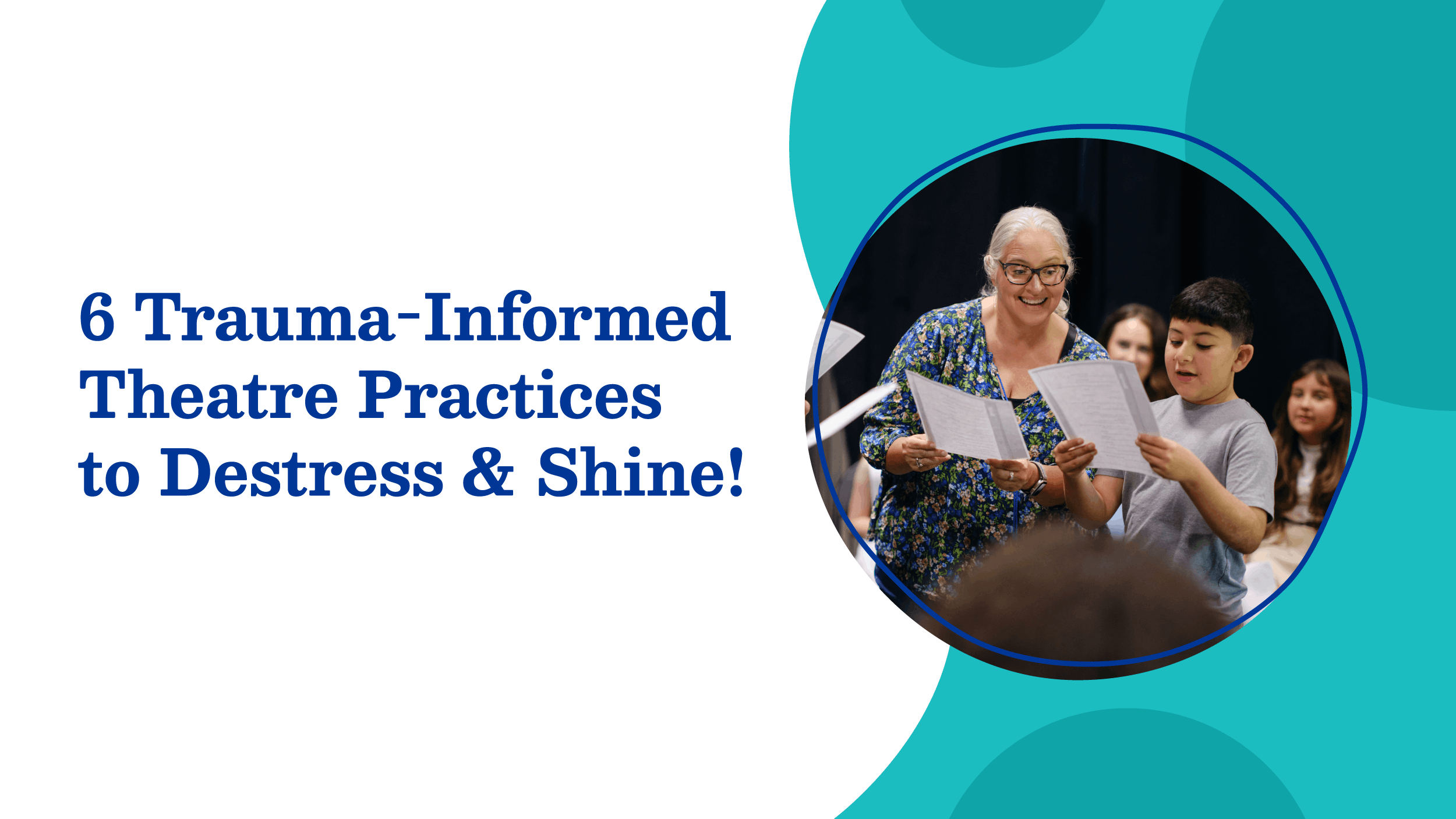
It’s Time to Shine: 6 Trauma-Informed Theatre Practices to Ease Stress
By Jennifer Wienke, Trauma-Informed Educator Fairbanks, Alaska
It’s National Stress Awareness Month, and as a trauma-informed theater educator at the Fairbanks Academy of Community Theatre (FACT) in Fairbanks, Alaska, it’s the perfect time to share strategies to help mitigate youth and family stress.
“Life-changing” is a word communicated to the FACT team often in emails, social media posts, and in the area on an audition form that asks for additional information to work better with families. These are words we deem common in our work.
But for the families we work with? It is life-changing.
Before diving into trauma-informed practices, I want to share a story of a 14-year-old student we work with. After a summer camp two years ago, we received a thank-you card signed by an entire family (mom, dad, and big brother). Their child was in our week-long camp and was a new face for us. He was a quiet student who didn’t speak to us or others, but that’s common in the theater world. Everyone needs time to settle in before their light gets to shine. What we didn’t know was that he was nonverbal and didn’t speak until well into middle school, and after, only spoke to family and close friends.
This was the moment we realized the value of our work and how it affects the people in our world.
6 Trauma-Informed Theatre Practices
Trauma-informed theater practice is the backbone of my organization in Fairbanks. We provide a safe space for all students and families, meeting everyone where they are while exploring the arts. When my partner and I began our company, we designed every facet with the mindset of what we wanted in a youth program growing up — a place that could give us a chance to explore theater and feel safe and nurtured when our homes did not provide the support we needed.
In each of our programs, we focus on developing connections, fostering a predictable environment, creating a strong sense of belonging, and building self-esteem for the youth we serve. We work extensively on confidence-building interactions, and we understand that everyone has a story. Our students, of all ages, come to us with past traumas. Our job is to create a safe space that resists retraumatization.
In my presentation, “Act It Up”: Trauma-Informed Theater Practices for Every Classroom, we walk through a typical rehearsal and explore how intentional practices can help students combat and manage stress, including:

A predictable schedule and routine to create stability

Warm welcomes to help every student feel seen and heard

Regular emotional check-ins to support self-awareness and regulation

Clear communication and choice, including opportunities to ask questions and opt out if needed

Tools for success, such as a cast website for each program, with resources to build confidence throughout the project

Thoughtful daily reflections to help students recognize their growth and take pride in their contributions
How Harmony Supports My Community
Harmony Academy resources have been pivotal in helping our process, especially when working with our teen mentors as directors in training or camp mentors. Our mentors always have Quick Connection Cards ready in their badge holders to help campers build connections, resolve conflicts, or offer brain breaks. Since our programs all take place outside of the school day, we utilize Harmony Out-of-School Time (OST) lessons in our work, especially with our youngest cast members. Even the Harmony mascot Z has been seen perched on our light board or hanging backstage in a youth production for a quick hug if needed!
Stress and anxiety can peak at this time of year, especially with state testing approaching. Many parts of the trauma-informed approach can help families and educators by providing easy-to-implement tools with social, personal, and academic learning concepts. With a focus on belonging, clear communication, and brain breaks, stressful days can be more manageable for everyone.
A Life-Changing Transformation
It has been two years since the 14-year-old nonverbal student came to us. Since that time, he has had three leading roles and tons of ensemble roles, has become a camp mentor, and learned how to do sound and instruct small youth groups. On our most difficult days, we think of these stories, and we are inspired all over again.
Whether it’s Stress Awareness Month or any other time, always remember to power through, knowing we must continue offering tools for every person to find their “shine”.
Additional Time to Shine Resources:
Harmony Professional Learning Resources:
About the Author:

Jennifer Wienke is the current program development coordinator for Out-of-School programming in the Fairbanks North Star Borough School District. In her time off, she is the owner and director of the trauma-informed theater company, Fairbanks Academy of Community Theater. Jennifer is a proud member of the Harmony Educator Advisory Group.